
Megamist Global Sustainability Solutions Logo
MISTING ISTANBUL TECHNICAL PRODUCT FILE

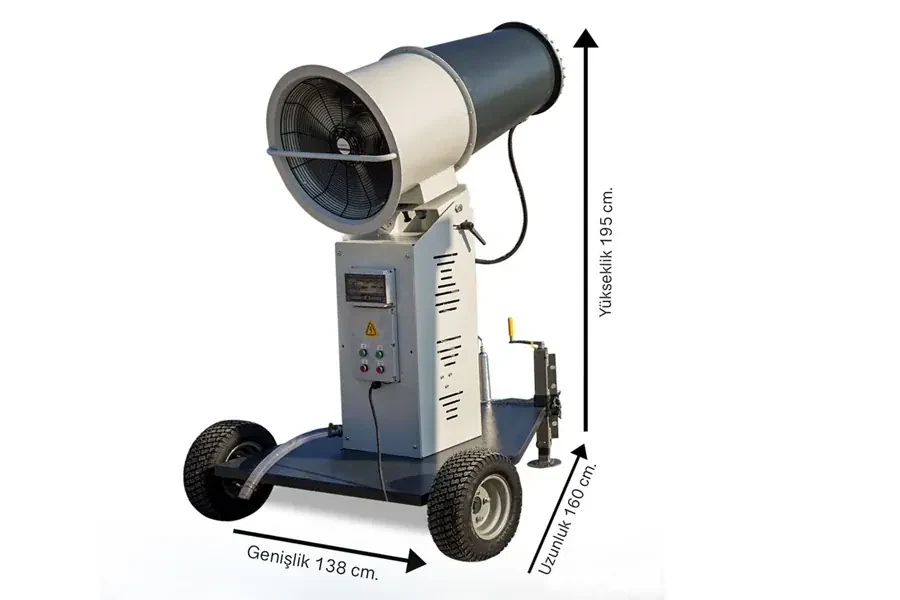
Pulverized Dust Reduction System – Type 2

Pulverized Dust Reduction System – Type 2 is a technical component selected to direct fine water distribution toward the dust source and limit airborne particle movement according to site conditions. The decision is based not only on the product name, but also on site dimensions, duty cycle and compatibility with connected equipment.

Atomised Dust-Control SystemsAtomised Dust-Control SystemsProject consulting
Product typeAtomised Dust-Control Systems
Product groupAtomised Dust-Control Systems
EvaluationProject-specific
SupportSelection and application
Application FocusPulverized Dust Reduction System – Type 2 is used in dust suppression and particle reduction projects with pulverized spraying.
Technical CompatibilitySpray distance, droplet density, pump capacity, wind exposure and site size are analyzed together.

Final selection is made after site, capacity and connection conditions are verified.

Product Overview

Pulverized Dust Reduction System – Type 2: its technical role within the project

Pulverized Dust Reduction System – Type 2 is a technical component selected to direct fine water distribution toward the dust source and limit airborne particle movement according to site conditions. The decision is based not only on the product name, but also on site dimensions, duty cycle and compatibility with connected equipment.

Project-Focused Advantages

  • Dust control close to the source
  • Coverage based on site geometry
  • Scheduled automated operation
  • Modular spray-line layout
01

Dust control close to the source

The product role is confirmed with site-specific data.

02

Coverage based on site geometry

The product role is confirmed with site-specific data.

03

Scheduled automated operation

The product role is confirmed with site-specific data.

Application Areas

Where is Pulverized Dust Reduction System – Type 2 evaluated?

The product is evaluated in these settings as part of the complete system rather than as a stand-alone item.

01

Mines And Stockyards

Layout, duty cycle and environmental conditions are evaluated together.

02

Crushing And Screening Points

Layout, duty cycle and environmental conditions are evaluated together.

03

Demolition And Earthwork Zones

Layout, duty cycle and environmental conditions are evaluated together.

04

Recycling And Material-Transfer Areas

Layout, duty cycle and environmental conditions are evaluated together.

Selection and Compatibility

Technical factors that shape the correct product decision

Technical suitability is verified against real operating conditions rather than a catalogue heading alone.

  1. 01
    Location of the dust source and dispersion direction

    The decision is verified against the other system components.

  2. 02
    Wind, exposure and operating intensity

    The decision is verified against the other system components.

  3. 03
    Pump capacity and nozzle layout

    The decision is verified against the other system components.

  4. 04
    Water access and drainage conditions

    The decision is verified against the other system components.

Implementation Flow

A corporate process from survey to commissioning

01

Define Requirements

The site, operating target and duty cycle are clarified.

02

Technical Matching

The product is matched with the pump, line, fittings and controls.

03

Layout Planning

Mounting points and service access are planned on the layout.

04

Commissioning

Checks are completed and operating and maintenance guidance is handed over.

Frequently Asked Questions

Technical questions about Pulverized Dust Reduction System – Type 2

Which sites are suitable for Pulverized Dust Reduction System – Type 2?

Pulverized Dust Reduction System – Type 2 is considered for mines and stockyards, crushing and screening points, demolition and earthwork zones after the dust source and site conditions have been assessed.

How is water consumption calculated?

Nozzle flow, operating time, number of zones and automation schedule are calculated together rather than using site area alone.

Does wind affect performance?

Wind direction and speed influence droplet travel in exposed sites. Nozzle direction and operating zones should be planned accordingly.

Can the system be added to an existing facility?

A modular retrofit is possible when water, power, drainage and mounting infrastructure are suitable, but pump capacity must be rechecked.

How is the maintenance plan prepared?

Nozzle lines, filters, pumps and aiming components should be cleaned according to dust load. Drain-down procedures should be used for freezing conditions or long shutdowns.

MISTING ISTANBUL

Let us define the right configuration for your project

Share the site, application target and system infrastructure so the technical team can review product suitability.

Create Project Request